


Running ads on TikTok can feel overwhelming and impossible at first. The good news is that with the right strategy you can ride the wave and reach a big, engaged audience.
Why?
Running TikTok ads in 2025 is one of the smartest ways to reach new customers, grow your brand, and drive real sales, especially as the platform continues to dominate short-form video.
With millions of users scrolling daily and an algorithm built to push engaging content to the right people, TikTok gives businesses and creators a powerful opportunity to get in front of audiences who are ready to discover and buy.
But TikTok advertising isn’t like traditional digital ads. The creative style, the pacing, the sound, and even the user expectations are completely different.
To succeed, you need to understand not only how to run TikTok ads, but also how the platform works, what each ad format can do, how much it costs, and which strategies actually move the needle.
Whether you’re a small business testing ads for the first time or an experienced creator looking to scale TikTok Shop sales, this guide breaks everything down step-by-step.
You’ll learn the different types of TikTok ads, how to set up your first campaign, what budget to expect, and the best practices that top-performing brands use to get results.
By the end, you’ll know exactly how to launch TikTok ads with confidence and start turning views into customers in 2025.
Table of Contents
What are TikTok ads?
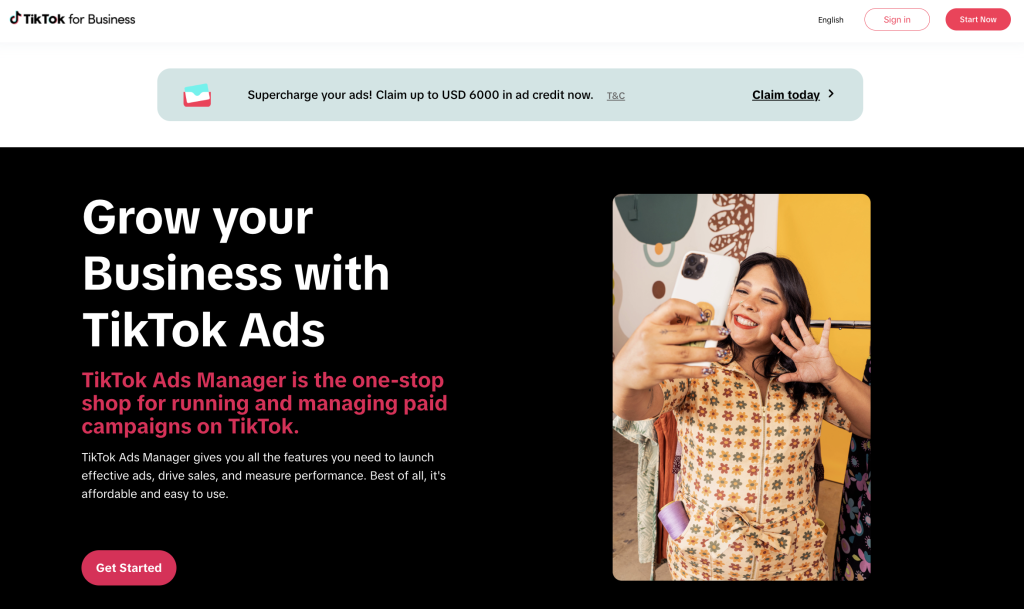
TikTok ads are paid promotions that show up inside the TikTok app: the feed, the For You page, the discovery section, etc.
Instead of relying solely on organic posts, you pay to reach targeted users, boost awareness, drive clicks, or get sales.
Because TikTok is a short-form, video-first environment, the ad formats tend to be lively, visual, and mobile-native.
TikTok ads are a great way to drive TikTok monetization and make money on the platform with a solid ROI.
What brands should use TikTok ads?
Pretty much any brand that wants to reach younger, mobile-first, highly engaged audiences. If your target includes Gen Z, Millennials or people who enjoy short-form video, TikTok is worth looking into.
Who can advertise on TikTok?
Brands, small businesses, creators, and agencies can all advertise on TikTok. You’ll need a TikTok Business account, access to TikTok’s Ads Manager, and adherence to TikTok’s advertising policies.
What are the benefits of advertising on TikTok?
Large, engaged user base
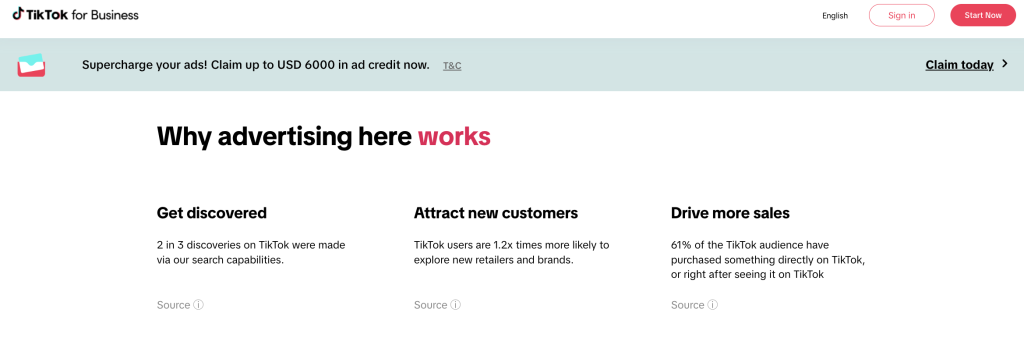
TikTok has a huge audience globally and people spend a lot of time watching and engaging. That means your ad has the potential to reach many eyeballs.
Creative, interactive ad formats
TikTok supports fun ad formats that feel native to the app: vertical videos, full-screen, sound-on, mobile-first. That gives you room to be creative.
Precise targeting options
You can target by demographics, interests, device, location, behaviours, so you’re not just blasting out ads, you’re reaching likely fans/customers.
Working with your specific TikTok niche is a good idea so that you can create accurate targeting information.
Detailed analytics and reporting
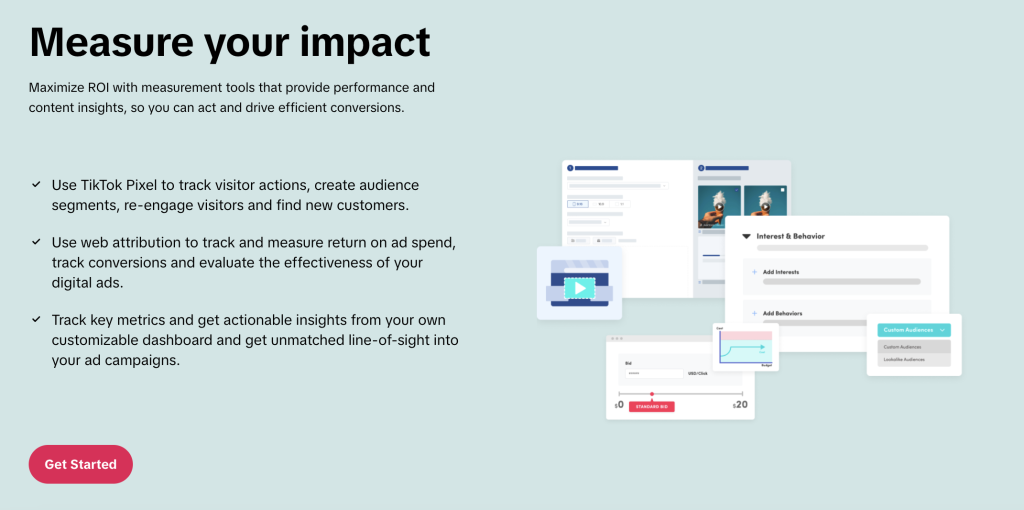
TikTok gives insights into impressions, clicks, conversions, cost per action, etc. That means you can track what’s working and adjust your campaigns.
How much do TikTok ads cost?
It’s not a fixed number. The cost depends on your audience, objectives, ad format, bidding strategy, competition, and more. Let’s break down what you should expect.
The reality of TikTok advertising costs
Minimum budget requirements
TikTok’s Ads Manager often requires a minimum daily budget or campaign budget. For example, some sources mention daily budgets starting at around US $20–50 for smaller campaigns (varies by region).
Expected ROAS by industry
Return on ad spend (ROAS) differs widely by industry. Some e-commerce brands report strong ROAS when the creative aligns with platform style; others find it tougher.
Studies suggest that ads which feel native and authentic tend to convert better.
Hidden costs to consider
- Creative production: high-quality vertical video, sound/animation, editing.
- Testing costs: you’ll need to test multiple creatives, audiences before scaling.
- Optimization time: you or your team will need to monitor, tweak campaigns.
- Attribution tools: you might need analytics/tracking tech to link TikTok ads to real business outcomes.
TikTok ad types
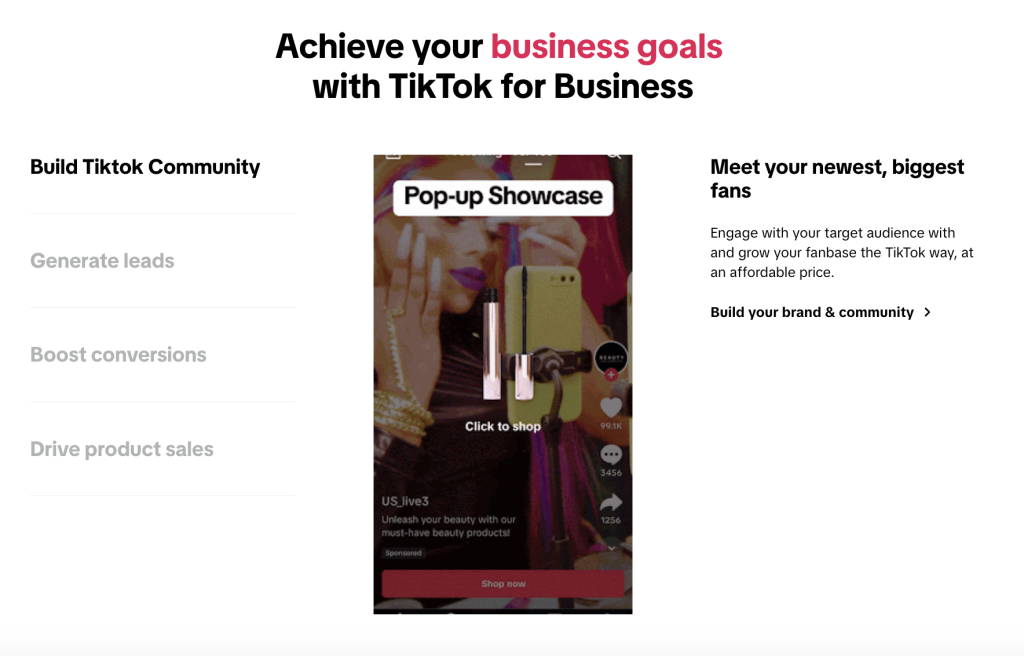
Here are the common ad formats you should know:
In-feed
These are video ads that play in the user’s For You feed, just like other content, so they blend in if done well.
TopView
The ad appears when the user opens TikTok: high visibility, great for awareness.
Branded hashtag challenge
You create a hashtag, encourage users to participate, post content under that hashtag. High engagement and UGC-driven.
Branded effects
Custom AR filters, stickers, interactive effects: users can play with them, create their own content.
Spark
Also called “Spark Ads” in some regions: you boost existing organic posts (your own or other creators’ posts) as ads. This helps maintain authenticity.
Ecommerce
TikTok supports ads that link directly to product pages, shop features, TikTok Shop integrations (in markets where TikTok Shop is live).
TikTok ad specs
Before you upload your ad, you need to make sure it meets TikTok’s technical requirements.
These specs ensure your video looks good, plays smoothly, and fits the platform’s full-screen, vertical format.
Getting the basics right, like resolution, length, and aspect ratio, can make a big difference in how your ad performs. Here’s what you need to know to set your creative up for success.
Video ads specifications
- Orientation: Vertical (9:16) is preferred.
- Length: Often 6-15 seconds works well, though longer can work if the story holds.
- Resolution & aspect ratio: High resolution, full screen (1080 × 1920 recommended).
- Sound: Use sound/music because users expect audio.
- Text overlay: Keep it readable, not too much text.
Image ad specifications
If using image ads (less common but possible) you’ll want:
- Aspect ratio: Often 1:1 or 4:5, or full-screen vertical.
- Good quality image.
- Minimal text, clear CTA.
TikTok ads vs. other platforms
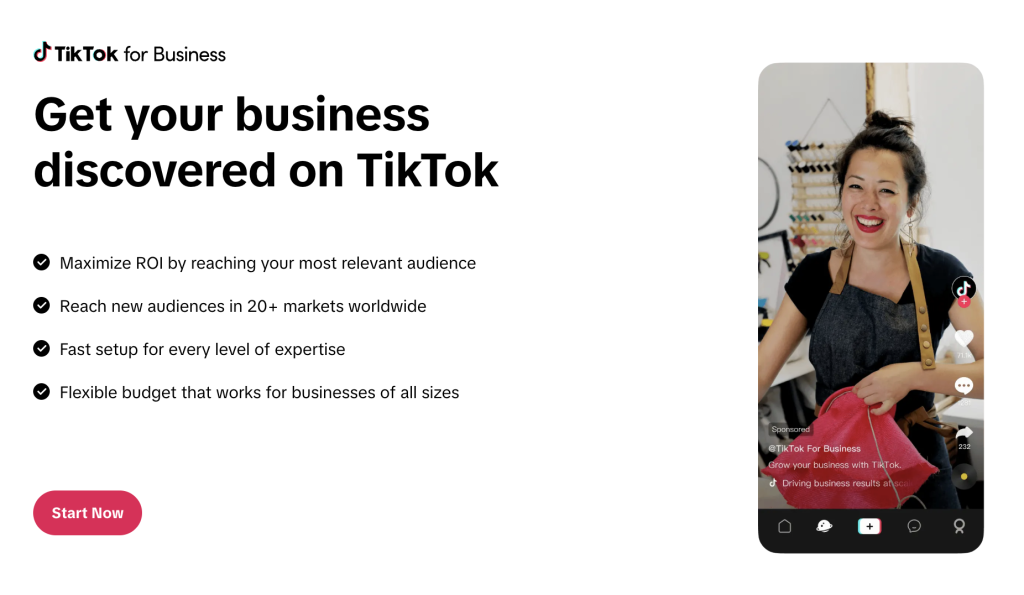
Before choosing where to spend your advertising budget, it’s important to understand how TikTok compares to platforms like IG, FB, and YouTube.
Each channel has its strengths, weaknesses, and unique audience behaviors. TikTok stands out for its short-form, creator-driven style and highly engaged users, but it isn’t always the right fit for every objective.
This section breaks down how TikTok stacks up against other platforms so you can decide when to use it, when to combine it with other channels, and how to get the best results for your brand.
Cost comparison
Some advertisers find TikTok ads cost per click (CPC) or cost per mille (CPM) is higher in certain markets than older platforms (like Facebook or Instagram) because competition is increasing.
Others achieve lower costs because of strong engagement. There is no one straight answer as it depends on many factors.
Conversion rates
Conversion depends heavily on creative + targeting. On TikTok, ads that feel authentic and natural perform better. Traditional ad creative (made for TV or desktop) often under-performs on this social network.
Best use cases for each platform
- TikTok: Great for brand awareness, discovery, reaching younger audiences, short-form storytelling.
- FB/IG: Strong for retargeting, older demographics, multi-step funnels.
- YouTube: Good for longer videos, tutorials, deeper engagement.
When to use what:
If you’re launching a new product and want buzz: TikTok ads + challenge format can work.
If you already have warm audiences and want to retarget: Instagram/Facebook may be efficient. Combine both for maximum coverage.
How to create your first TikTok ad in 7 steps
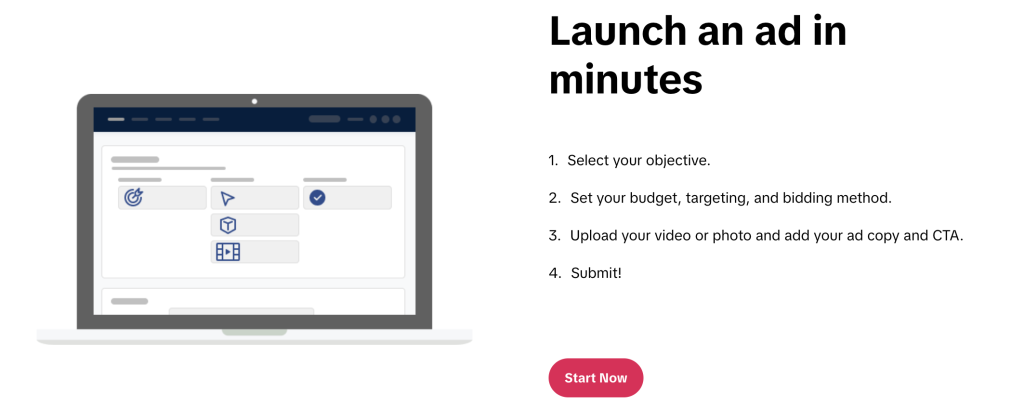
Here’s a step-by-step to get going:
1. Get a business account
Switch your TikTok account to a Business or Creator account so you have access to ad tools and analytics.
2. Integrate TikTok with your Shopify store
If you’re selling products, connect TikTok’s commerce tools (or pixel) so you can track purchases and run TikTok Shop / product-link ads.
3. Open the TikTok Ads Manager
Log into TikTok’s Ads Manager (for your region), set up your account, billing, payment method.
4. Set your advertising goal
Choose your objective: awareness, traffic, app installs, conversions, catalog sales. Your creative and bidding will align with that goal.
5. Select your audience
Use demographics, locations, interests, device types. You might create custom audiences (website visitor retargeting) or lookalike audiences.
6. Set your budget and schedule
Decide daily or lifetime budget, campaign start/end dates, bidding strategy (lowest cost, cost cap etc). Monitor performance.
7. Create and submit your ad
Upload your vertical video (or image), write caption, include call-to-action, choose link or product. Select ad placement, tracking. Submit. After review (TikTok reviews ads for policy compliance) it goes live.
Best practices for creating engaging TikTok ads
Creating a TikTok ad that actually grabs attention isn’t just about having a good product: it’s about understanding how people use the platform.
TikTok users scroll fast, expect authentic content, and respond best to ads that feel like they belong on their For You Page.
To make your campaigns stand out and convert, you need creative that matches TikTok’s energy, pacing, and style.
The following best practices will help you craft ads that not only get TikTok views but also inspire people to click, comment, and buy.
Start with an attention-grabbing hook
The first few seconds of your ad determine whether someone keeps watching or scrolls away.
Use movement, a bold statement, or a surprising moment to hook viewers instantly and signal that your video is worth watching.
Opt for a TikTok-native feel
Make your ad look like a regular TikTok: natural lighting, less polished, real people, visible editing style typical of the platform. Enterprise-level polish can sometimes feel inauthentic.
Keep the style casual, relatable, and creator-like so users don’t immediately identify it as an ad and swipe past.
Use trending sounds and hashtags
Trending audio and hashtags help your ad feel relevant and timely, which boosts watch time and engagement.
When viewers recognize the sound, they’re more likely to stay and interact because it fits the TikTok culture they already enjoy.
Leverage user-generated content
If you can, use creators or actual customers in your video, show authentic reactions, unboxings, reviews. Authenticity builds trust and drives action.
UGC for TikTok ads feels more realistic than polished studio ads, and it builds trust by showing real people using your product.
Whether you create it yourself or partner with creators, UGC often drives higher conversions because it feels honest and relatable.
Partner with influencers
Working with TikTok creators who align with your brand helps reach their engaged audience and gives your ad extra credibility.
Influencers already have loyal audiences who trust their recommendations, making them powerful partners for ads.
When you use their videos in Spark Ads, you get both organic-style content and paid amplification for maximum reach
Provide a compelling offer
Great ad creative can get views, but a strong offer turns those views into action.
Make sure users know the benefits: discount, limited time, free shipping, exclusive deal. A strong offer helps convert views into clicks/purchases.
Troubleshooting TikTok ads
Even the best TikTok ad campaigns run into problems, especially when you’re still learning the platform.
Maybe your ad gets rejected, your costs suddenly spike, or your views look great but sales aren’t coming in.
It’s important to monitor TikTok ads analytics to rule out any problems and find the best solution.
Troubleshooting is a normal part of running successful TikTok ads, and knowing what to look for can save you a lot of wasted budget.
This section breaks down the most common issues advertisers face, why they happen, and how to fix them so your campaigns stay on track and keep delivering results.
Common ad rejection reasons
- Violating TikTok’s ad policies (prohibited content, questionable claims, copyright use).
- Low-quality creative (blurry video, weird aspect ratio, excessive text overlay).
- Poor landing page: if your product link isn’t working, slow to load, or not mobile-optimized.
Why your ads aren’t converting
- Audience mismatch: you’re targeting the wrong people.
- Weak hook or too slow start: users scroll away.
- Offer isn’t clear or compelling.
- Ad looks too “ad-like” and doesn’t fit the feed.
When to pivot your strategy
If after testing you see high impressions but low clicks: tweak creative, change CTA.
If you get clicks but no conversions: check your landing page, audience fit, product relevance.
If the budget drains too quickly with low results: pause, review targeting and creative, test different formats.
Examples of great TikTok ads
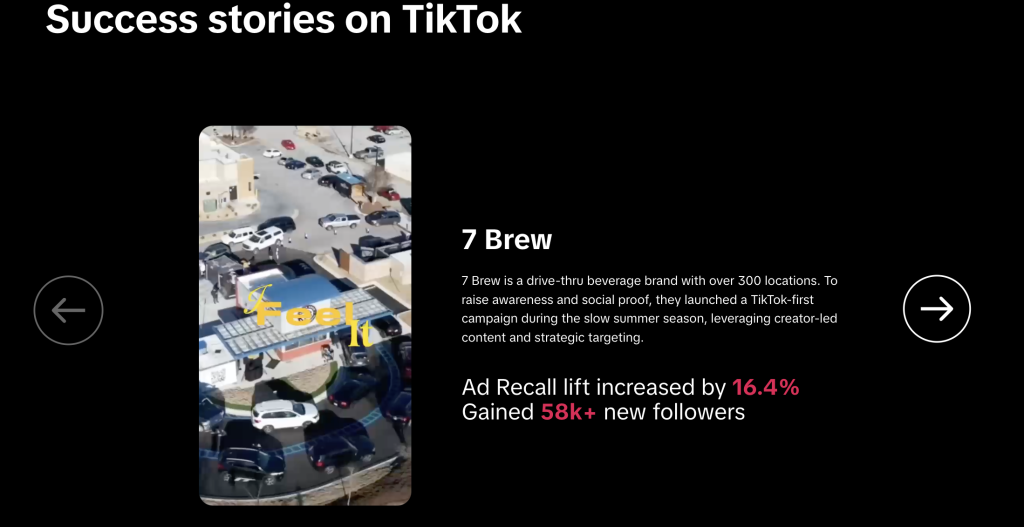
Studying high-performing TikTok ads is one of the easiest ways to understand what works on the platform.
Successful brands lean into authenticity, strong hooks, simple storytelling, and creative formats that blend naturally into the For You Page.
Below are three real TikTok ad examples along with explanations of why each one performed so well.
Example 1: HelloFresh
Their ad uses user-generated style footage of someone cooking with the meal kit, real reactions, simple text overlay. It feels like a normal TikTok rather than a big brand commercial.
HelloFresh ran an in-feed ad using user-generated-style footage of someone unboxing a meal kit, cooking step-by-step, and giving a quick reaction at the end.
The video looked exactly like everyday content on TikTok, shot on a phone, casual, and natural. This ad worked because it didn’t feel salesy or overly produced.
Why it worked: It tapped into TikTok’s culture of authentic cooking content, which kept viewers watching.
The clear visuals of the ingredients and the final meal also made the value of the product obvious without needing heavy text or narration. By using simple storytelling and a relatable tone,
HelloFresh made the ad feel like a recommendation from a friend rather than a commercial.
Example 2: E.l.f. Cosmetics “#eyeslipsface” campaign
E.l.f. Cosmetics created one of TikTok’s most famous branded hashtag challenges with “#eyeslipsface,” using a custom song and encouraging users to show their makeup looks.
The campaign exploded because it involved the community rather than just advertising to them. TikTok users love participating in trends, and the challenge gave them a fun, easy format to copy.
It also used a catchy original sound that went viral beyond the ad itself.
Why it worked: This ad worked because it turned viewers into creators, generated massive volumes of user-generated content, and established a cultural moment around the brand. The virality came from participation, not just promotion.
Example 3: Chipotle “Lid Flip” challenge
Chipotle launched the “Lid Flip” challenge, where users tried flipping the lid of their burrito bowl in one motion, inspired by one of Chipotle’s own employees.
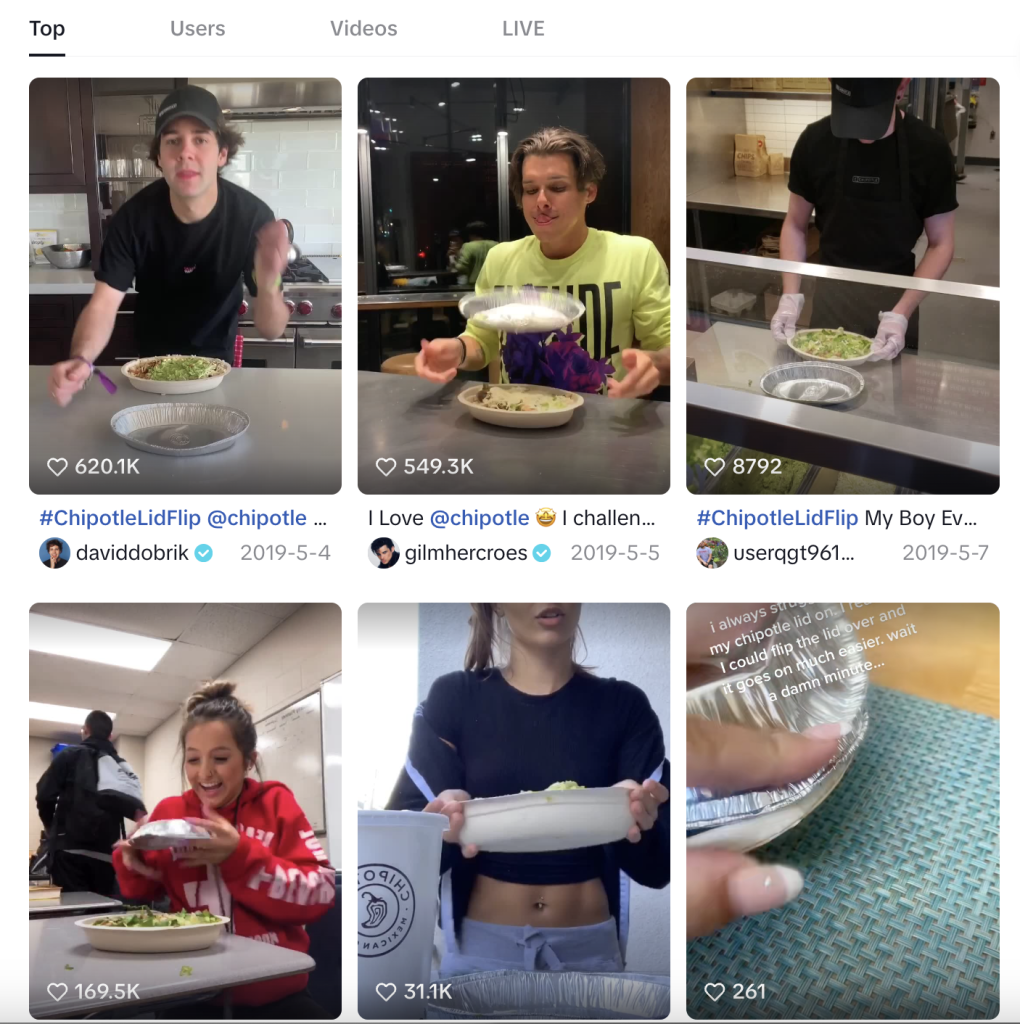
The trend took off because it was playful, repeatable, and surprisingly difficult: perfect for TikTok’s challenge culture. It encouraged people to visit Chipotle just to attempt the flip and record their video.
Why it worked: it connected real product experience with a fun skill-based challenge. It blended entertainment, authenticity, and brand identity in a way that felt native to TikTok.
Users weren’t just watching; they were engaging, attempting the challenge, and sharing their own creations.
This campaign encouraged users to flip the lid on their bowl in a fun way. It became a trend and generated massive engagement.
Start advertising on TikTok today
If you’ve been on the fence about running TikTok ads, now is a great time to start.
Make sure you start with a clear goal, the right audience, mobile-first creative, and a budget you’re comfortable testing.
The platform offers huge upsides for creators and businesses alike.
How to Run TikTok Ads FAQ

How do I run ads on TikTok?
Switch to a business account, access TikTok Ads Manager, set up campaign, target audience, budget, create ad creative, submit, monitor, optimize.
How much does it cost to run an ad on TikTok?
Costs vary widely—minimum budgets exist, cost per click/ impression depends on audience and competition. Be prepared to test.
Is running TikTok ads worth it?
Yes, if you align your creative with platform style, target properly, track results, adjust. It can be a powerful way to grow visibility, reach new audiences, and drive sales.
How much is 1000 views on TikTok ads?
This depends on your bidding strategy, region, audience. There’s no fixed “cost per 1000 views” that applies universally.
Can you run TikTok ads globally?
Yes—TikTok supports many countries and you can target global or regional audiences depending on your campaign settings.
How long should a TikTok ad be?
Shorter tends to be better—6-15 seconds is a good range. But it depends on the story. If you hold attention for longer, 20-30 seconds can work.
Are there any drawbacks to advertising on TikTok?
Yes—creative expectations are higher (you need to feel native), competition may drive costs up, results vary widely by region/audience/product. Also attribution to business outcomes can be tricky.
What is the secret to creating a viral TikTok ad campaign?
There’s no guaranteed secret, but key elements: authentic content, strong hook, mobile-first vertical video, platform-native feel, trending music/sounds, emotional or surprising moment, clear CTA.
How do TikTok ads work?
TikTok ads work by letting you pay to show your videos to a targeted audience.
You choose your goal (like views, clicks, or sales), pick who you want to reach, set your budget, upload your ad, and TikTok shows it to people who are most likely to engage.
The system uses bidding and algorithms to deliver your ad to the right users at the right time, and you can track performance in real time to see what’s working and make improvements.